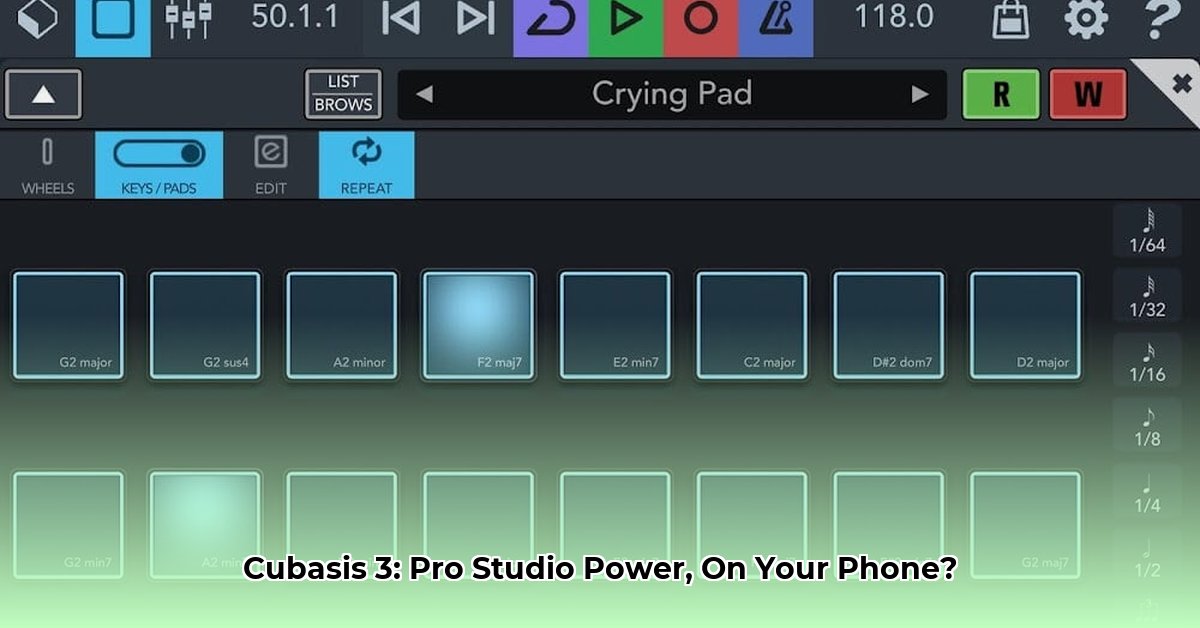
Cubasis 3 APK aims to bring professional-level music production capabilities to mobile devices. It's a digital audio workstation (DAW) – software for recording, editing, and mixing audio and MIDI – essentially a portable recording studio. But does it live up to the hype? This review delves into its features, performance, and user experience.
Feature-Packed Functionality
Cubasis 3 boasts impressive features for a mobile app. It offers multi-track recording (layering instruments and vocals), MIDI editing (for working with keyboard instruments and drum machines), and an array of built-in effects (reverb, delay, EQ). This allows for intricate arrangements, even on a phone or tablet. Its intuitive design caters to beginners while offering advanced capabilities for experienced musicians.
Key Features Explained
Multi-track Recording: Record multiple audio tracks simultaneously, mimicking a professional studio setup. This layered approach creates rich, textured soundscapes.
MIDI Editing: Edit MIDI data—notes, melodies, drum patterns—using tools like the piano roll and drum editor, enabling precise control over musical ideas.
Audio Effects: A comprehensive range of effects (reverb, delay, EQ and more) are readily available for shaping and enhancing your tracks. These can drastically change the sound of your music.
Automation: Manipulate parameters of effects and instruments over time, adding dynamic changes to your tracks, creating subtle shifts or dramatic soundscapes. This adds a level of professionalism to your productions.
User-Friendly Interface
Cubasis 3’s user interface (UI) is a significant strength. Its logical layout simplifies navigation, even for DAW novices. Adding tracks, applying effects, and automating parameters are typically seamless and efficient. The workflow is generally smooth and enjoyable for both beginners and experienced producers. However, some less frequently used features may require some searching initially.
Performance and Stability: A Device-Specific Consideration
Cubasis 3's performance varies significantly depending on your device's specifications (processor, RAM, storage). A high-end tablet will likely offer a smoother experience than an older phone. Independent performance benchmarks are currently lacking, making it challenging to provide definitive statements on latency or CPU usage. We strongly encourage users to test Cubasis 3 on their own devices and share their findings.
Audio Units (AU) Plugin Support: Expanding Sonic Horizons
Cubasis 3's support for Audio Units (AU) plugins is a major advantage. These third-party plugins add effects and instruments, dramatically expanding the app's sonic possibilities. However, remember that your device's hardware will limit the number and type of plugins you can use simultaneously.
Comparing Cubasis 3 with Competitors
Cubasis 3 competes with other mobile DAWs like GarageBand and FL Studio Mobile. While a detailed comparison is beyond the scope of this review, Cubasis 3 distinguishes itself with its professional-level features and AU plugin support. The best DAW depends on your specific preferences and needs.
Pricing and In-App Purchases
Cubasis 3's pricing structure involves an upfront purchase cost, with some additional in-app purchases for extra features or plugins. Thoroughly researching the cost before buying is recommended. Understanding any limitations of a free or trial version is crucial for making an informed decision.
Conclusion: A Powerful, but Device-Dependent Mobile DAW
Cubasis 3 APK is a solid mobile DAW offering a compelling blend of features and user-friendliness. Its AU plugin support is a significant benefit. However, performance is intrinsically tied to the capabilities of individual devices. Users should carefully consider their device's hardware before purchase. Cubasis 3 stands as a strong contender in the mobile music creation space, but whether it is the "best" solution depends on your individual needs and expectations. Experimentation is key to determining if Cubasis 3 fits your workflow.
Optimizing Cubasis 3 Performance: Practical Tips
- Reduce Track Count: Fewer tracks reduce CPU load. Prioritize the essentials.
- Limit Effects: Excessive effects strain the processor. Choose judiciously.
- Adjust Buffer Size: A higher buffer size reduces CPU strain, but increases latency (delay). Find a balance.
- Close Background Apps: Free up system resources for smoother operation.
- Update Android OS: Essential for bug fixes and performance enhancements.
- Power Management: Ensure your device isn't in power saving mode during use.
⭐⭐⭐⭐☆ (4.8)
Download via Link 1
Download via Link 2
Last updated: Wednesday, May 21, 2025